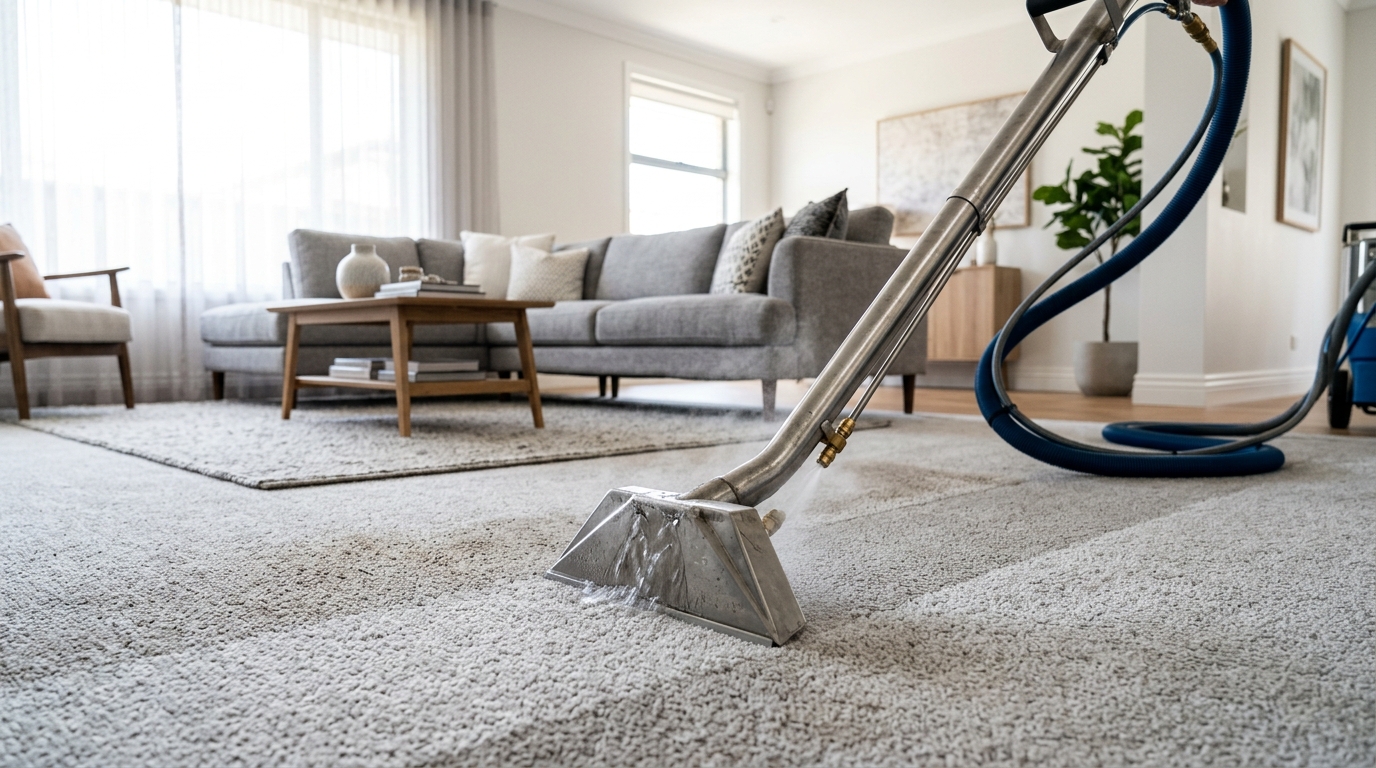
Carpeting acts as the largest indoor air filter in a home, trapping airborne pollen, pet dander, particulate dust, and tracked-in road oils. However, when an amateur clean is performed with rented grocery-store machines, homeowners frequently saturate carpet backing with soapy water, triggering rapid resoiling, foul sour odors, and permanent cellulosic browning.
Carpet & Upholstery Key Takeaways
- The Acid Rinse Rule: Always finish extraction with an acid rinse (pH 4.5–5.5). Alkaline soap residue acts like sticky tape on dry fibers, causing traffic lanes to turn black within 2 weeks.
- Fiber ID Governs Everything: Synthetic fibers (nylon/polyester) can handle high heat (200°F) and alkaline pre-sprays; natural wool and silk will felt, shrink, and brown above pH 8.0.
- Two Dry Passes per Wet Stroke: Water left in carpet cushion padding causes mildew. Always make two dry vacuum passes for every one wet spray pass.
- Targeted Spotting Chemistry: Match the spot chemistry: acids for tannins (coffee/tea/wine), alkaline enzymes for proteins (blood/milk), and volatile solvents for oil/grease.
1. Textile Fiber Identification Matrix
Selecting the wrong chemical reagent can permanently strip dye or melt delicate face fibers:
| Fiber Type | Composition & Behavior | Safe Cleaning Chemistry | Maximum Temperature |
|---|---|---|---|
| Nylon (Synthetic) | Resilient, accepts dye readily, high durability. Susceptible to acid staining (Kool-Aid, wine). | Alkaline pre-spray (pH 8.5–9.5) followed by acidic rinse (pH 4.5). | 212°F (Steam extraction safe) |
| Polyester / PET (Synthetic) | Naturally stain-resistant to water dyes, but oil-loving (oleophilic). Attracts body oils. | Surfactant-heavy degreasing pre-spray (pH 9.0–10.0) with citrus boosters. | 190°F |
| Wool (Natural Protein) | Microscopic scales that interlock. Harsh alkalis dissolve keratin protein; shrinks under heat. | WoolSafe approved neutral detergent (pH 5.5–8.0 only). | 150°F (Warm water only) |
| Cotton / Linen (Cellulosic) | Highly absorbent; prone to cellulosic browning (lignin bleeding) if overwetted. | Mild neutral cleaner with rapid drying fans and mild acid rinse. | 160°F |
2. Forensic Spotting Chemistry Guide
Never rub a spot; rubbing frays fiber ends, creating a permanent fuzzy shadow known as "pile distortion." Always blot from the outer perimeter toward the center using the appropriate reagent:
- Tannin Spots (Coffee, Tea, Red Wine, Beer): Tannins are acidic plant pigments. Apply a mild acidic spotter (5% citric acid solution) to chelate the color bonds, dwell 5 minutes, and blot with a dry white towel.
- Protein Spots (Blood, Dairy, Vomit, Egg): Proteins coagulate under heat. Never use hot water. Apply a cool bio-enzymatic digester (pH 8.0) and allow bacterial enzymes to break down the peptide bonds before extracting with lukewarm water.
- Oil, Tar & Grease (Cooking oil, motor grease, cosmetics): Apply a volatile dry solvent (VDS) to a clean white rag (never pour solvent directly onto carpet backing, as it dissolves the latex adhesive). Blot firmly until color transfer stops.
3. Upholstery Cleaning: Cleaning Codes Demystified
Before applying any liquid to a sofa or armchair, check the furniture law tag for its standardized fabric cleaning code:
- Code 'W' (Water-Based): Can be cleaned with hot water extraction and water-based foaming detergents.
- Code 'S' (Solvent-Only): Must be cleaned exclusively with water-free dry-cleaning solvents. Water will cause water-ring stains, dye bleeding, and fabric shrinkage.
- Code 'W/S' (Water or Solvent): Can safely tolerate both water-based gentle foam and mild dry solvents.
- Code 'X' (Vacuum Only): Extremely delicate vintage or specialty weave; can only be vacuumed or brushed. Zero liquid allowed.
Related Floorcare & Deodorization Tools
Explore our subfloor pet urine restoration protocol or calculate square footage carpet and upholstery cleaning costs across US metro markets.
This technical document serves as a permanent site chain-of-custody and clearance record. Retain in property remediation compliance file for minimum 3 years per 29 CFR 1910.1030(h).