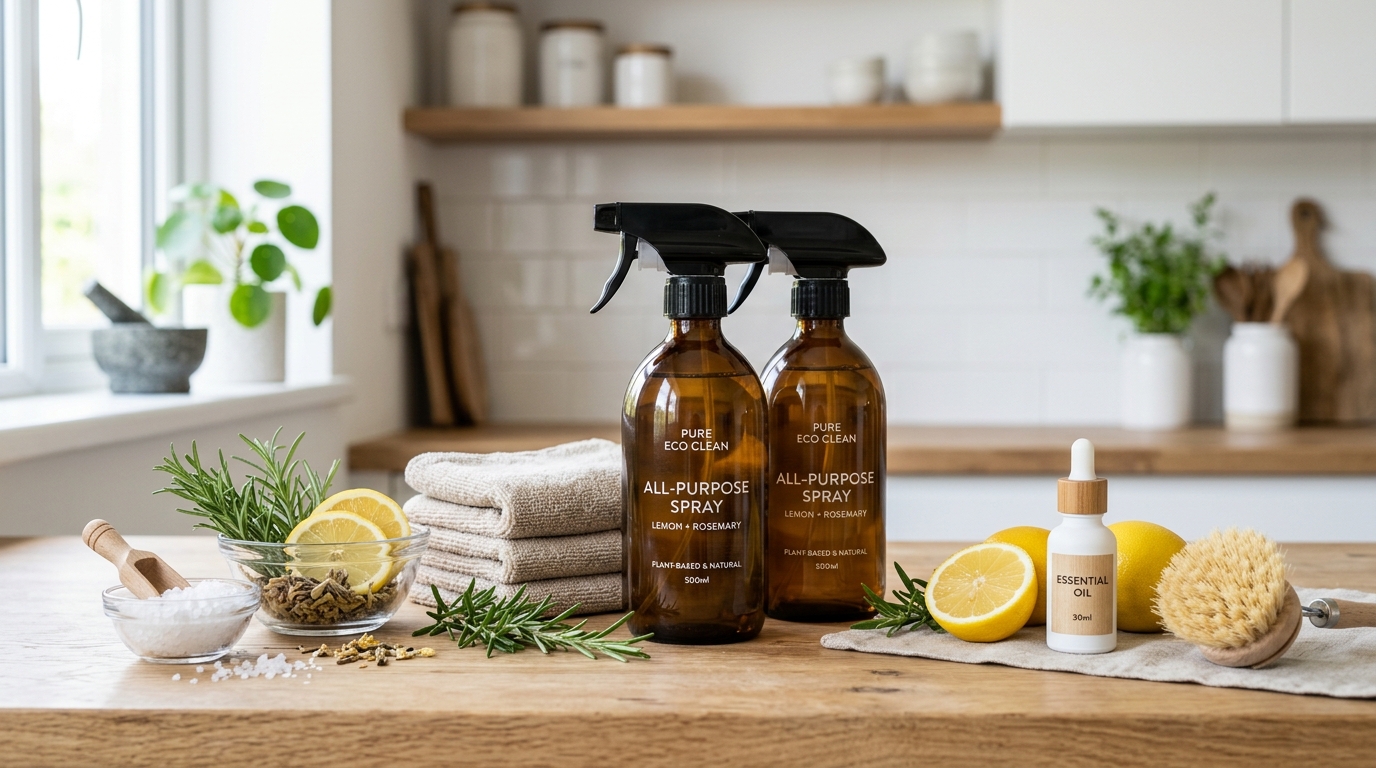
For decades, consumers were forced to choose between harsh, lung-irritating chemical cleaners and weak, ineffective folk remedies. Today, green chemistry offers scientifically proven cleaning solutions that match or exceed commercial petroleum-derived formulas—without releasing hazardous volatile organic compounds (VOCs) or endocrine-disrupting phthalates into your indoor living environment.
Green Chemistry Key Takeaways
- Stop Mixing Vinegar & Baking Soda: Combining an acid with a base creates salt water and carbon dioxide, destroying the cleaning power of both substances.
- Lethal DIY Chemical Reactions: Never mix vinegar with bleach (chlorine gas) or vinegar with hydrogen peroxide (corrosive peracetic acid).
- Understand the pH Scale: Use acids (pH 2–3) to dissolve hard water minerals, and alkalis (pH 9–11) to saponify cooking oils and protein grease.
- EPA List N Botanical Disinfectants: Botanical thymol (thyme oil derivative) and accelerated hydrogen peroxide (AHP) kill 99.99% of pathogens with zero toxic VOCs.
• Bleach + Vinegar / Acids: Releases toxic chlorine gas, causing immediate burning of the eyes, throat, and pulmonary edema.
• Bleach + Ammonia: Generates toxic chloramine vapors.
• Hydrogen Peroxide + Vinegar: Forms peracetic acid, an aggressive oxidizing acid that irritates skin and eyes and corrodes fixtures.
1. The Baking Soda and Vinegar Myth Debunked
One of the most ubiquitous DIY cleaning tips across social media is pouring baking soda onto a surface and spraying it with vinegar. While the bubbling eruption looks impressive, the underlying chemistry proves it is counterproductive:
The bubbling is merely carbon dioxide gas escaping into the air. What remains on your counter is diluted sodium acetate—essentially weak salt water. Acetic acid is powerful because it is an acid (pH ~2.5), which dissolves mineral scale. Sodium bicarbonate is effective because it is a mild alkaline abrasive (pH ~8.3), which cuts light grease. When combined, they neutralize each other, destroying both properties.
2. The pH Spectrum: Right Tool for the Right Soil
All professional cleaning is governed by the chemical pH scale (0 to 14). To remove a stain efficiently without mechanical abrasion, you must match the chemical opposite of the contaminant:
| pH Tier | Safe Green Ingredients | Target Soiling & Application |
|---|---|---|
| Acidic (pH 2.0 – 3.5) | 5% Distilled Vinegar, Citric Acid powder, Sulfamic acid | Hard water mineral deposits, limescale, tea/coffee stains, soap scum, toilet bowl rings, rust. |
| Neutral (pH 6.5 – 7.5) | Plant glucosides (Alkyl polyglucoside), Castile soap, Sal Suds | Hardwood flooring, natural marble, limestone, granite, daily countertop maintenance, dishware. |
| Alkaline (pH 8.5 – 11.5) | Baking soda (pH 8.3), Washing soda (pH 11.0), Potassium carbonate | Saponifying burnt fats, range hood grease, cooktop oils, baked-on grime, laundry stain boosting. |
3. True Non-Toxic Disinfectants: EPA Safer Choice & List N
Many commercial disinfectants rely on quaternary ammonium compounds ("quats") or sodium hypochlorite (bleach). Quats are known asthmagens, skin sensitizers, and environmental pollutants that bioaccumulate in wastewater.
Green chemistry provides highly effective, EPA-registered alternatives that decompose into harmless water and oxygen:
- Botanical Thymol (Thyme Oil Derivative): Extracted from the thyme plant, thymol disrupts bacterial cell membranes and viral lipid envelopes. Certified on EPA List N with a 3 to 5-minute kill time against human coronaviruses, Norovirus, and Staph, requiring zero hazard warnings or rinsing.
- Accelerated Hydrogen Peroxide (AHP): Combines 0.5% hydrogen peroxide with organic surfactants and chelating agents. It degrades purely into water and elemental oxygen within 10 minutes, leaving zero toxic residue.
- Citric Acid Disinfectants: Organic fruit-acid formulations that leverage rapid pH reduction to destroy cellular envelopes. Highly effective on food-contact surfaces.
4. Indoor Air Quality & Fragrance Hazards
According to EPA indoor environmental studies, concentrations of many volatile organic compounds (VOCs) are 2 to 5 times higher inside homes than outdoors. The primary culprits are artificial scents:
- The Terpene-Ozone Hazard: Synthetic citrus (limonene) and pine (pinene) fragrances are volatile hydrocarbons. When released into a home with electronic equipment or trace ambient ozone, they react rapidly to produce secondary pollutants, including gaseous formaldehyde and sub-micron aerosol particles.
- Phthalate Plasticizers: Synthetic fragrances use diethyl phthalate (DEP) as a fixative to make scents linger for hours. Phthalates are known endocrine disruptors linked to hormonal imbalances.
- The Clean Air Standard: True clean has no smell. Odor elimination should be achieved through molecular capture (HEPA filtration, activated carbon, and bio-enzymes), not chemical perfuming.
Related Non-Toxic Guides & Screening Tools
Learn how to screen eco-friendly cleaning services for legitimate green chemistry or estimate costs for non-toxic whole-home remediation.
This technical document serves as a permanent site chain-of-custody and clearance record. Retain in property remediation compliance file for minimum 3 years per 29 CFR 1910.1030(h).