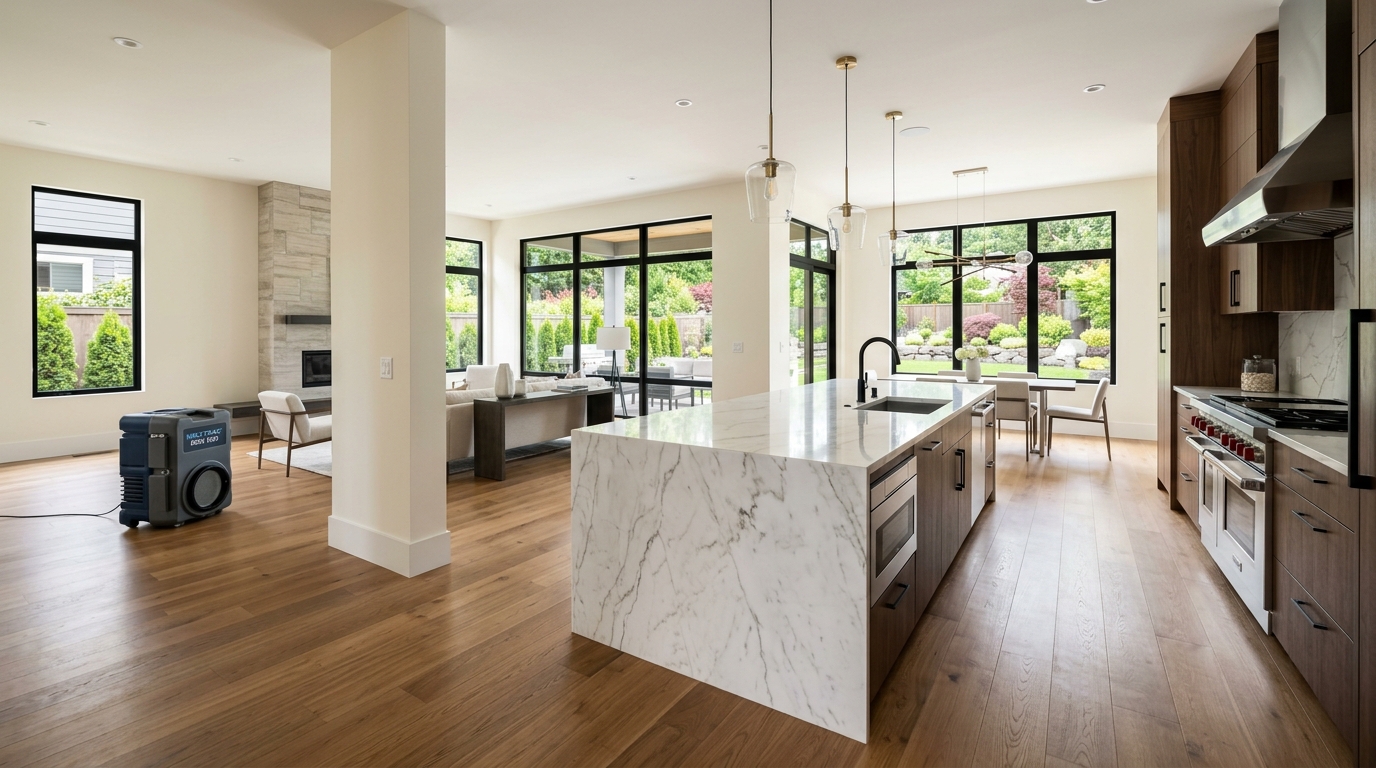
Post-construction cleaning is fundamentally different from routine domestic janitorial work. Joint compound, tile mortar, and masonry contain crystalline silica particles smaller than 2.5 microns. Without proper containment and true HEPA filtration, standard vacuums simply act as aerosol sprayers, redistributing toxic dust throughout the structure.
Key Post-Construction Takeaways
- Never Dry Sweep: Dry sweeping pushes 0.5–2.5 micron silica particles into the air, where they remain suspended for up to 24 hours.
- HVAC Isolation: Shut off heating and air conditioning; seal all supply and return grilles with plastic sheeting and blue painter's tape before starting.
- The 3-Phase Standard: Split the project into Rough Clean, Deep HEPA Clean, and Final 24-Hour Settling Clean.
- Avoid Water-Only Mopping: Pure water dissolves drywall gypsum into an alkaline paste that dries into a cloudy white haze across hardwood and tile.
1. The 3-Phase Post-Construction Standard
Attempting to complete a post-construction clean in a single pass is the most common reason for failed inspections. The professional standard requires three distinct phases:
Phase 1: The Rough Clean (Subcontractor Turnover)
Occurs immediately after plumbers, electricians, painters, and drywallers complete mechanical work:
- Remove all large scrap wood, drywall offcuts, metal fasteners, and cardboard packaging.
- Scatter damp, oil-free sweeping compound to bind floor dust, then sweep with wide push brooms.
- Peel blue protective films and stickers from windows, porcelain tubs, and stainless steel appliances before adhesive bakes onto surfaces.
Phase 2: The Deep HEPA Scrub
This represents 75% of total labor. Follow strict top-to-bottom sequencing:
- Ceilings & Light Cans: Vacuum inside recessed light cans, smoke alarm covers, ceiling fans, and crown molding using static-charged telescoping poles.
- Drywall Dust Extraction: Vacuum painted drywall walls using wide horsehair floor brush attachments on a true HEPA vacuum, then wipe down with damp microfiber towels.
- Cabinetry & Millwork: Vacuum inside all cabinet drawer slides and shelving corners before wiping laminate or solid wood interiors.
- Windows & Tracks: Scrape paint splatter with plastic safety scrapers; vacuum track debris and clean glass streak-free.
Phase 3: The 24-Hour Final Polish
Micro-fine airborne particles take 18 to 24 hours to settle out of the air column. A final sweep of horizontal surfaces the following morning delivers a move-in ready finish:
- Damp wipe all countertops, window sills, switch plates, and appliance fronts with static-dissipating microfiber cloths.
- Damp mop floors with pH-neutral floor wash to lift any residual white gypsum haze.
2. Specialized Chemical Formulations & Residue Solvents
| Construction Residue | Recommended Chemistry | Application & Surface Caution |
|---|---|---|
| Drywall Gypsum Haze | Diluted White Vinegar (1:10) or Citric Acid Wash | Dissolves alkaline gypsum salts cleanly. Test on natural marble first; safe on polyurethane hardwoods. |
| Latex Paint Overspray | Isopropyl Alcohol (70%+) or Citrus Terpenes | Softens dried acrylic latex paint on glass, tile, and laminate. Scrape gently with plastic razor blades. |
| Silicone Caulking Smears | Mineral Spirits or Denatured Alcohol | Breaks down curing silicone film around tubs and sinks without scratching acrylic or fiberglass. |
| Cementitious Mortar Haze | Sulfamic Acid Crystal Solution (pH 1.5) | Cleans grout haze from glazed ceramic and porcelain. Never apply to acid-sensitive unsealed limestone or marble. |
3. Post-Construction Operational Checklist
Need Pricing or Checklists for Construction Cleaning?
Calculate 2026 square-foot pricing for post-construction rough and final cleans, or check our contractor vetting guide.
This technical document serves as a permanent site chain-of-custody and clearance record. Retain in property remediation compliance file for minimum 3 years per 29 CFR 1910.1030(h).