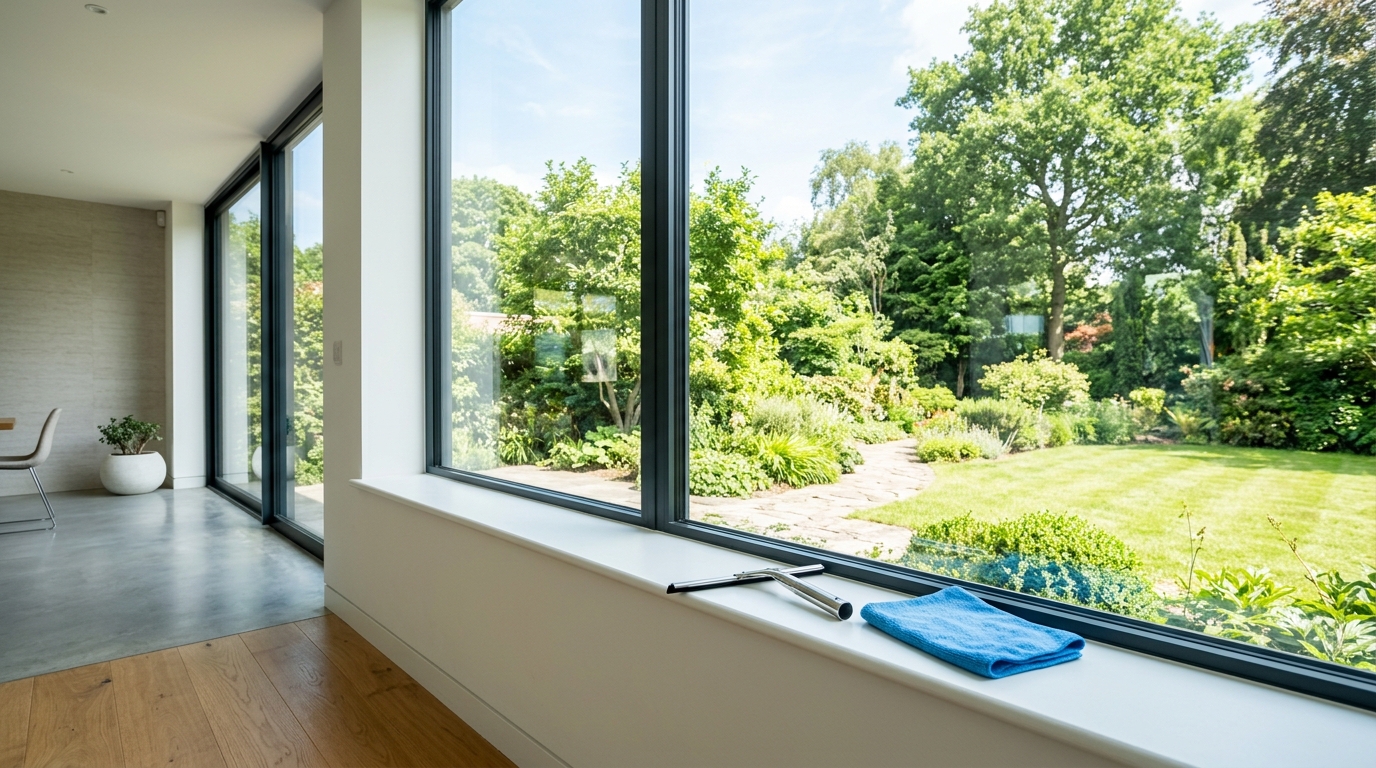
Clean windows dramatically improve natural daylighting, interior mood, and property curb appeal. Yet over 80% of DIY window cleaning efforts result in noticeable streaks, cloudy mineral hazing, and muddy, malfunctioning sliding tracks that trap moisture inside the building envelope. Achieving optical transparency requires understanding glass chemistry and drainage engineering.
Window Restoration Key Takeaways
- Ditch Paper Towels: Paper towels release wood pulp binders and create static charges that pull dust back onto glass. Use professional vulcanized rubber squeegees.
- Vacuum First, Clean Second: Never spray liquid into dry window tracks; it turns loose dirt into sticky mud. Always dry-vacuum with a crevice nozzle first.
- Keep Weep Holes Clear: Exterior drainage weep holes prevent rain from backing up into interior framing; clear them with a wire before heavy rains.
- Reverse Mineral Etching with Acids: Hard water spots from sprinklers are alkaline minerals (calcium and magnesium) that must be dissolved with mild organic acids (citric acid).
1. Mineral Scale vs. Glass Etching
Homeowners often mistake mineral deposits for dirt that can be scrubbed away. Mineral scale exists in two distinct stages:
- Stage 1 (Surface Mineral Scale): Calcium carbonate and magnesium salts deposited on top of the glass by lawn sprinklers or rain runoff. Easily dissolved using warm 10% citric acid or white vinegar with a 10-minute dwell time.
- Stage 2 (Silicic Acid Etching): Prolonged exposure to alkaline tap water (pH > 8.5) reacts with the silicon dioxide in the glass itself, chemically pitting the optical surface. Stage 2 etching cannot be washed away with liquid chemicals; it requires mechanical micro-polishing using a cerium oxide slurry and a high-density felt wheel.
2. The 3-Step Slider Track Decontamination Process
Sliding patio door tracks and horizontal sliding window sills accumulate airborne soot, dead insects, pollen, and construction dust:
| Step | Operational Objective | Required Tool & Method |
|---|---|---|
| Step 1: Dry Agitation | Break loose packed dirt crust | Use a stiff detail brush or clean paint brush to sweep along the roller guide rails, lifting dry dust from corners into center of track. |
| Step 2: HEPA Extraction | Evacuate dry particulates completely | Use a narrow crevice attachment on a HEPA vacuum to extract 100% of dry dirt. Never add water until dry extraction is complete. |
| Step 3: Damp Microfiber Wrap | Detail vinyl and wipe rollers | Wrap a microfiber cloth around a flat putty knife or wooden dowel; mist with neutral cleaner and slide along the rail grooves to wipe clean. |
3. The Professional S-Technique Squeegee Method
Professional window washers can clean a 6-foot window in under 30 seconds with zero streaks using the continuous "S" technique:
- Cut the Edge: Angle the squeegee vertically and pull a 1-inch dry border along the top and one side of the window frame. This creates a dry perimeter where water cannot seep back onto clean glass.
- Begin the Sweep: Place the squeegee at the top corner in the dry zone. Pull horizontally across the top, then pivot 180 degrees into a smooth downward arc.
- Continuous Serpentine: Move the blade across the glass in overlapping snake-like motion, maintaining a 45-degree angle toward the wet glass to push water downward.
- Bottom Catch: Pull straight down to the sill and wipe the rubber blade with a damp towel between panes.
Related Window & Move-Out Tools
Check our interactive deposit recovery checklist or review local contractor rates for whole-home window and post-construction glass detailing.
This technical document serves as a permanent site chain-of-custody and clearance record. Retain in property remediation compliance file for minimum 3 years per 29 CFR 1910.1030(h).